
Finding bees on your property can be stressful, especially when they are gathering near your home, entering a wall, or building a hive under a roofline. Many homeowners want the fastest solution possible, but extermination is not always the best answer. In many cases, live bee hive relocation is safer, cleaner, and more environmentally responsible.
Bee hive relocation vs extermination: which one should you choose? At AA Beekeeper, we focus on humane bee removal that protects your property while giving the colony a chance to survive. Bees are essential pollinators for local gardens, farms, wildflowers, and ecosystems. Relocation allows homeowners to resolve the issue without destroying a valuable part of the environment.
Key Takeaways
-
Bee hive relocation removes the colony while helping protect important pollinators.
-
Extermination may leave behind chemicals, dead bees, honeycomb, odors, and pest issues.
-
Swarms and established hives require different removal approaches.
-
DIY bee removal can be dangerous and may make the problem worse.
-
Professional removal includes live extraction, hive cleanup, sealing, and prevention guidance.
First, Know What You Are Dealing With
Before deciding how to handle a bee problem, it is important to understand whether you are seeing a swarm or an established hive.
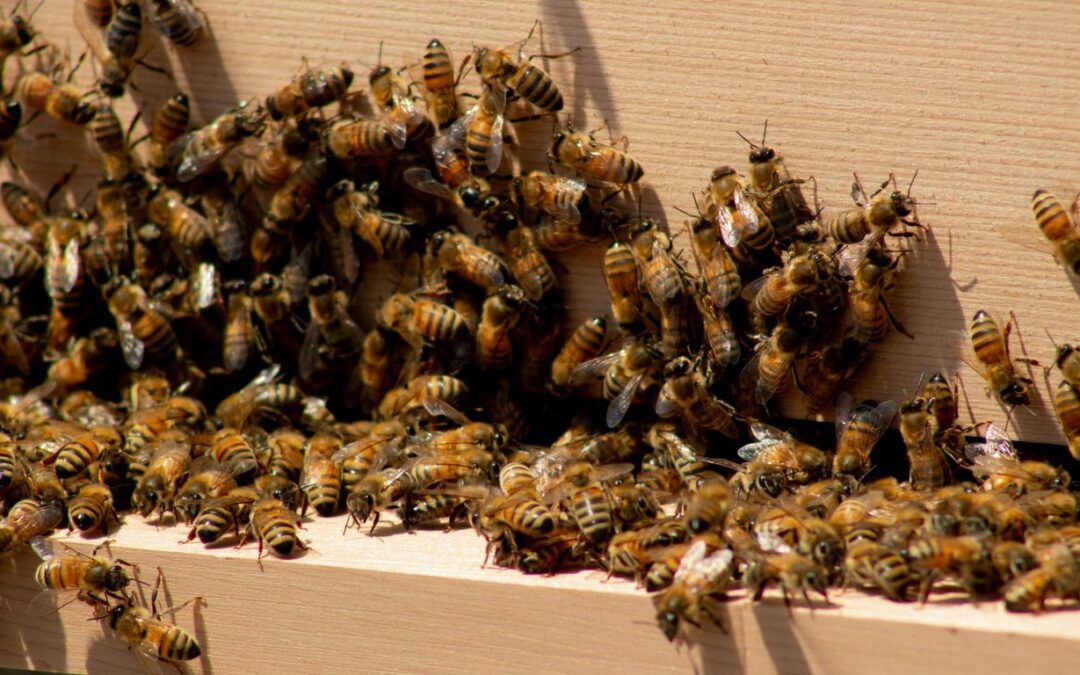
A swarm is usually a temporary cluster of bees. Swarms often gather on tree branches, fences, exterior walls, or other surfaces while scout bees search for a permanent home. Because they are not protecting honeycomb or brood, swarming bees are often less defensive than bees living in an established hive.
An established hive is different. If bees are repeatedly flying in and out of a small opening, such as a wall gap, attic vent, roofline, chimney, or eave, they may already be building comb inside the structure. Established colonies are more protective because they have honey, brood, and a queen to defend.
This difference matters because a swarm may be removed more simply, while a structural hive often requires a more detailed removal and cleanup process.
Relocation vs. Extermination: What Is the Difference?
The biggest difference between relocation and extermination is what happens after the bees are found. Relocation focuses on removing the colony alive and moving it to a safer environment. Extermination focuses on killing the bees, often without solving the full structural problem.
Here is a simple comparison:
-
Relocation preserves pollinators. Bees are removed alive whenever possible and moved to a managed apiary or another suitable location where they can continue pollinating.
-
Extermination may leave the hive behind. Chemical treatment can kill the bees, but honeycomb, wax, honey, brood, and dead bees may remain inside the structure.
-
Relocation reduces chemical exposure. Humane removal avoids introducing unnecessary pesticides into areas near children, pets, wildlife, and beneficial insects.
-
Extermination can attract pests. Leftover hive material can draw ants, rodents, roaches, moths, and even new swarms.
-
Relocation supports long-term prevention. Professional removal includes cleanup and guidance on sealing entry points so the same issue is less likely to return.
For homeowners who want a complete and responsible solution, relocation is often the better choice.
Why Extermination Can Create Bigger Problems
Extermination may seem quick, but it can leave hidden issues behind. When a hive is treated with chemicals, the bees may die inside walls, ceilings, attics, or roof cavities. The honeycomb and honey are often still there.
Over time, leftover honey can melt, stain building materials, and create unpleasant odors. Wax and brood can attract secondary pests. The scent of the old hive can also draw new bees back to the same location.
Chemical treatments may also introduce toxins into areas where pets, children, birds, or other beneficial insects could be exposed. That is why AA Beekeeper recommends live removal whenever it is safe and practical.
What Happens During Professional Bee Relocation?
AA Beekeeper begins with an inspection to locate the bees, identify entry points, and determine whether the colony is a swarm or an established hive. From there, our team creates a removal plan based on the hive’s location, size, and activity.
During live extraction, specialized equipment is used to collect the bees gently and keep the colony contained during transport. Protecting the queen is a major priority because the colony depends on her. When the queen is safely relocated with the workers, the bees have a better chance of surviving and rebuilding.
If bees are inside a structure, controlled access may be needed to reach the honeycomb. Once the bees and comb are removed, the area should be cleaned and sealed to reduce the risk of pests, odors, and future infestations.
Why DIY Bee Removal Is Not Worth the Risk
Trying to remove bees without proper equipment can quickly become dangerous. Established colonies may respond defensively when disturbed, especially if the hive is hidden inside a wall or roofline. Homeowners risk stings, falls from ladders, and accidental exposure to large colonies.
Store-bought sprays or repellents may also make the situation worse. Instead of removing the colony, they can agitate the bees or push them deeper into the structure. If the bees die inside the wall and the hive material remains, the cleanup problem is still there.
Professional removal is safer for the homeowner, the property, and the colony.
Preventing Future Bee Problems
After removal, prevention becomes the next priority. Bees often enter homes through small cracks, vents, roof gaps, chimney openings, stucco cracks, siding gaps, or other protected spaces. Sealing these areas helps prevent scout bees from choosing the same structure again.
Homeowners should watch for early signs of activity, especially during swarm season. If bees repeatedly visit one opening or gather near the same area, it is best to schedule an inspection before the colony becomes larger or moves deeper into the structure.
Choose Relocation Over Extermination
Bee hive relocation offers a safer, cleaner, and more responsible alternative to extermination. It removes the bees, protects your home, preserves pollinators, and helps prevent the same issue from returning.
If you have bees on your property, contact AA Beekeeper today to schedule a professional inspection and receive an estimate for live bee removal and relocation.
Frequently Asked Questions
Is bee relocation better than extermination?
Yes, in many cases. Relocation removes the bees alive, protects pollinators, and includes hive cleanup. Extermination may kill the colony but often leaves behind honeycomb, odors, pests, and chemical residue.
What is the difference between a swarm and a hive?
A swarm is usually a temporary cluster of bees looking for a new home. A hive is an established colony with honeycomb, brood, and regular bee traffic in and out of a nesting site.
Can I remove a bee hive myself?
DIY removal is not recommended. Bees may become defensive when disturbed, and improper removal can leave honeycomb behind, leading to odors, pests, and recurring infestations.
Why does honeycomb need to be removed?
Honeycomb can attract ants, rodents, roaches, moths, and new swarms. It can also melt, stain surfaces, and create odors if left inside walls, ceilings, or rooflines.
What happens to the bees after relocation?
When possible, bees are moved to a managed apiary or another suitable environment where they can recover, rebuild, and continue pollinating.