
You spot bees clustering near your eaves or buzzing around a hole in the fence, and the first thing you want to know is simple: what kind of bees do I have, and do I need to worry? The answer matters because a honey bee colony, a bumble bee nest, and a carpenter bee tunnel each call for a completely different response. After nearly 30 years of rescuing and relocating bees across Southern California, our team at AA Beekeeper has learned that a few quick observations (size, fuzz, flight, and where they’re nesting) solve most identification questions.
Key Takeaways
- Most bees homeowners see in Southern California are honey bees, bumble bees, carpenter bees, or smaller solitary bees.
- Honey bees live in large colonies with wax comb; carpenter bees drill into wood; bumble bees nest in small groups, usually at ground level.
- Where the bees are going matters as much as what they look like.
- Honey bees can’t be reliably told apart from Africanized honey bees by sight, so treat any defensive colony with caution.
- A professional inspection settles identification quickly and safely, and it’s the right call whenever bees are nesting in or on your home.
What Kind of Bees Do I Have? The Four Most Common Types
Most backyard bees fall into four groups: honey bees (golden-brown, fuzzy, hive-building), bumble bees (large, round, very fuzzy), carpenter bees (big, with a shiny, hairless abdomen), and small solitary bees such as mason or sweat bees. Each behaves differently, so identification starts with size, body shape, and how the bees move around your property.
Honey bees
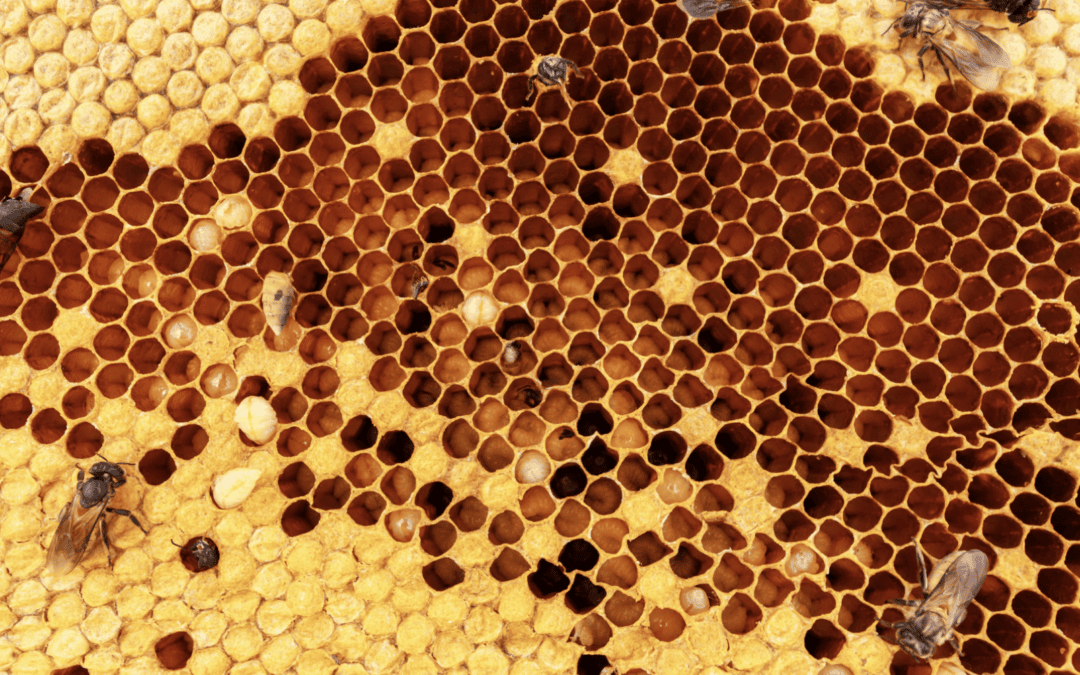
Honey bees are about the size of a large paperclip’s width, golden-brown with darker bands, and covered in fine hair. They’re social insects: a single colony can hold tens of thousands of workers, and the University of Delaware’s Mid-Atlantic Apiculture Research and Extension Consortium notes that colonies can reach roughly 60,000 workers at their peak. Inside a wall, chimney, or tree hollow, they build parallel sheets of wax comb to store honey and raise young. Seeing a steady stream of bees entering and exiting one gap is the classic sign of an established honey bee hive.
Bumble bees
Bumble bees are noticeably larger and rounder than honey bees, with thick, fuzzy bodies, often marked with yellow, black, or orange. Their colonies are far smaller, typically nesting in abandoned rodent burrows, compost piles, or dense ground cover rather than building large wax combs inside walls. They tend to be docile unless the nest is disturbed. Some native bumble bee species in California have drawn legal protection, so it’s worth getting a firm identification before anything is moved or sprayed.
Carpenter bees
Carpenter bees look like bumble bees at first glance, but their abdomens are smooth, shiny, and mostly hairless. The giveaway is the nest: perfectly round, roughly half-inch holes drilled into unpainted or weathered wood on decks, fascia boards, and fence posts, often with sawdust-like debris underneath. They’re solitary, so there’s no “hive” in the honey-bee sense, though repeated tunneling can damage wood over the years.
Small solitary bees
Mason bees, leafcutter bees, and sweat bees are small, often metallic or dark, and easy to overlook. They nest individually in small holes, soil, or plant stems and rarely sting. If you see tiny bees working your garden flowers and not much else, they’re almost certainly foraging and not nesting in your home.
How Can You Tell Bees Apart by Behavior and Nest Location?
Nest location is often the fastest identification clue: honey bees favor enclosed cavities like wall voids, chimneys, and soffits; carpenter bees bore into wood; bumble bees nest in the ground or low cover; solitary bees use tiny holes. Behavior fills in the rest. A tight, repeated flight path into one entry point suggests a honey bee colony, while scattered, wandering visits usually mean foraging.
Use this quick reference:
| Clue | Honey bee | Bumble bee | Carpenter bee |
|---|---|---|---|
| Body | Golden-brown, banded, fuzzy | Large, round, very fuzzy | Large, shiny hairless abdomen |
| Typical nest | Wall voids, chimneys, tree hollows (wax comb) | Ground burrows, dense cover | Round tunnels in wood |
| Colony size | Tens of thousands | Small (dozens to a few hundred) | Solitary |
| Typical sign | One busy entry point, hum in walls | Low, ground-level activity | Perfect round holes, sawdust |
Could It Be a Wasp or Yellow Jacket Instead?
Yes, and it’s one of the most common mix-ups. Wasps and yellow jackets are smoother, slimmer, and bright yellow and black, with little visible fuzz, and they build papery nests instead of wax comb. If the insect looks shiny and thin-waisted rather than fuzzy, it’s likely not a bee, and the safest response is different. We cover the full comparison in our guide to honey bees versus wasps versus yellow jackets.
What Kind of Bees Do I Have if They’re Aggressive?
Defensive behavior near a nest doesn’t automatically mean Africanized bees, but it’s a reason for caution. Africanized honey bees look nearly identical to European honey bees, and reliable identification generally takes lab analysis. In Southern California, where both types are present, the practical rule is simple: if bees are guarding a nest entrance, bumping into people, or reacting to nearby noise, give the area plenty of room and call a professional instead of testing the colony yourself.
Why Does Identification Matter Before You Act?
Correct identification keeps you safe and keeps the response proportional. Spraying a honey bee colony inside a wall leaves behind wax and honey that can attract pests and stain drywall; treating a harmless solitary bee as an infestation is unnecessary; and disturbing a protected native bumble bee nest could be a problem in its own right. The USDA’s Agricultural Research Service, the department’s chief in-house scientific research agency, studies pollinator health nationwide, which is part of why we prioritize accurate identification and live relocation over extermination wherever it’s safe.
If you’re unsure, a bee inspection is the fastest way to know exactly what’s on your property. Our licensed, bonded, and certified apiculturists confirm the species, locate the nest, and explain your options before any work begins. If the answer is a honey bee hive, our bee removal services cover live removal, relocation, and the structural repair afterward.
Frequently Asked Questions
How do I tell a honey bee from a bumble bee? Honey bees are slimmer, golden-brown, and usually seen in steady numbers around one entry point. Bumble bees are larger, rounder, and much fuzzier, and they’re usually seen in small numbers near the ground or flowers.
Are carpenter bees dangerous? Carpenter bees are generally not aggressive, and males can’t sting. They can damage wood over time by tunneling, but they don’t form large colonies or hives.
Can I identify Africanized bees myself? Not reliably. They look almost identical to other honey bees, and positive identification typically requires lab testing. Behavior near the nest is the practical warning sign.
Is it okay to just watch the bees for a few days? If bees are only visiting flowers, yes. If they keep entering the same gap in your home, don’t wait: an established colony grows, and the honey and wax can cause damage.
What happens if the bees turn out to be a honey bee hive? We relocate the colony alive to a local apiary or farm, remove the comb, and repair the structure so your home is left sealed and secure.
Not Sure What You’re Looking At?
Start with a free phone consultation: tell us what you’re seeing and where you’re located, and we’ll help you figure out what kind of bees you have. If an in-person look makes sense, we can schedule a bee inspection, often same-day or next-day, and give you a transparent estimate for safe, humane removal.