When something with yellow stripes is buzzing around your patio or flying in and out of your wall, the honey bees vs wasps vs yellow jackets question comes down to one thing: which one are you dealing with, and is it safe to leave alone? They look similar at a glance, but they build different nests, behave differently around people, and need very different responses. Here’s how to tell them apart in plain English, based on what our team at AA Beekeeper sees in the field across Southern California.
Key Takeaways
- Honey bees are fuzzy and golden-brown; wasps and yellow jackets are smooth, shiny, and sharply marked.
- Honey bees build wax comb inside cavities; wasps and yellow jackets build papery nests, often in the ground or in sheltered gaps.
- Yellow jackets are the most likely to be aggressive and to hover around food and trash.
- Honey bees can often be relocated alive; wasp and yellow jacket nests are handled differently.
- If you’re unsure, don’t approach the nest. Identification is safest from a distance, or from a professional.
Honey Bees vs. Wasps vs. Yellow Jackets: Quick Comparison
Honey bees are fuzzy, golden-brown, and nest in wax comb; wasps are slim, smooth, and build paper nests; yellow jackets are a type of wasp with bold black-and-yellow markings and a more aggressive streak around food. The table below covers the differences most homeowners notice first.
| Honey bee | Paper wasp | Yellow jacket | |
|---|---|---|---|
| Body | Fuzzy, golden-brown, banded | Slender, smooth, long legs dangling in flight | Compact, smooth, bright yellow and black |
| Nest | Wax comb inside wall voids, chimneys, tree hollows | Open, umbrella-shaped paper comb under eaves | Enclosed paper nest, often underground or in wall gaps |
| Diet | Nectar and pollen | Nectar and insects | Insects, plus sugary drinks and meat scraps |
| Temperament | Defends its nest; otherwise docile | Defends nest if approached | Quick to get aggressive, especially near food |
| Stinging | Usually stings once | Can sting repeatedly | Can sting repeatedly |
How Do You Tell a Honey Bee From a Wasp?
Look at the body. Honey bees are covered in tiny hairs and look soft and rounded. Wasps look smooth and shiny with a narrow, sharply defined waist. Honey bees also carry yellow pollen on their hind legs and move slowly from flower to flower, while wasps dart and hover.
Behavior helps too. Wasps are predators that hunt other insects, so you may see them landing on picnic food or chewing on wood fibers for nest material. Honey bees stick to flowers and water.
What Makes a Yellow Jacket Different From Other Wasps?
Yellow jackets are social wasps with bright yellow-and-black markings, and they’re more likely than other wasps to swarm food, drinks, and garbage cans. Yellowjackets are identified by their distinctive markings, by living in colonies, and by a rapid side-to-side flight pattern before landing. They have yellow or white markings and lack the dense tan-brown hair of honey bees.
They also behave differently late in summer. As insect prey becomes scarcer, workers turn to sugary foods, which is why yellow jackets show up at outdoor meals just when your patio is busiest. Some species, such as the German yellowjacket, are described as bold and aggressive and will pursue people who disturb the nest.
Where Do Their Nests Differ?
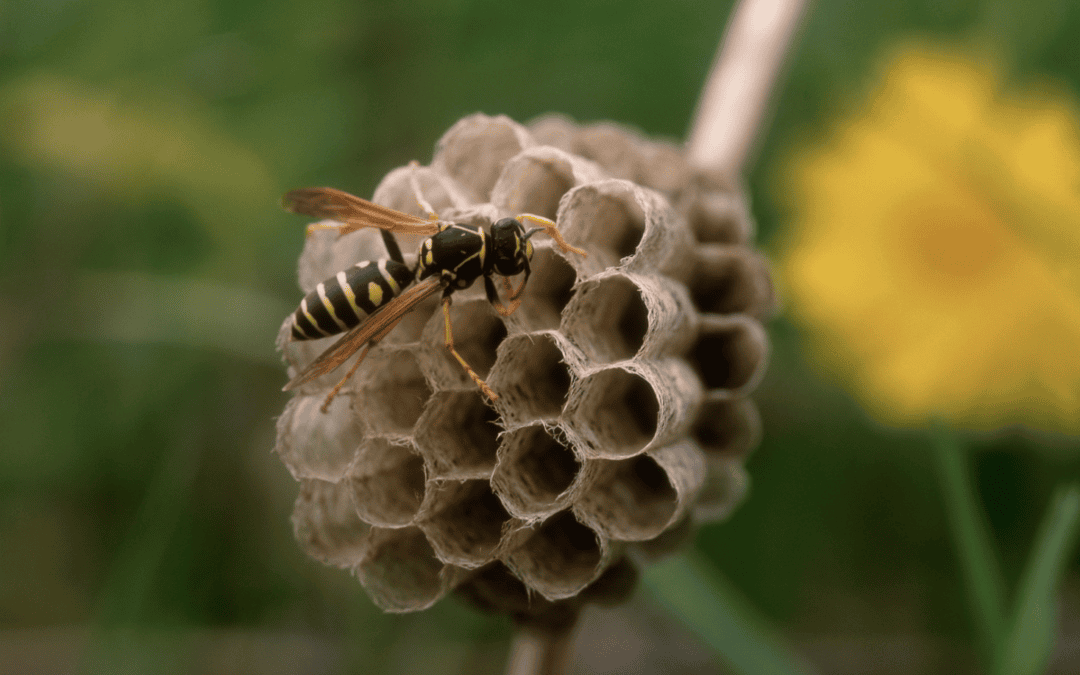
Nest style is the most reliable clue. Honey bees build vertical sheets of wax comb inside enclosed spaces such as wall cavities, chimneys, and tree hollows. Paper wasps build open, umbrella-shaped nests hanging from eaves and branches. Yellow jackets typically build enclosed paper nests, often underground or hidden in wall gaps and burrows. They chew wood fiber into a papery pulp to make them.
If you see a steady line of insects disappearing into a small hole in the ground, that’s more likely yellow jackets than honey bees. If the traffic is going into a gap in your siding or soffit and you hear a humming from the wall, honey bees are the likelier tenants.
Which One Should You Worry About?
All three can sting, and anyone with a known venom allergy should treat any nest as an emergency. Beyond that, yellow jackets are generally the most dangerous to be around, because they defend nests aggressively and can sting repeatedly. Honey bees are usually docile away from the hive, but a disturbed colony can respond fast, and in Southern California any defensive honey bee colony should be treated with caution because Africanized bees look nearly identical to other honey bees.
Never spray or block the entrance of a nest in your home. For honey bees, that leaves honey and wax behind and can push bees into your living space. Don’t try to identify a nest by getting close.
What Should You Do Once You Know?
- Honey bees: call a live removal specialist. AA Beekeeper relocates colonies to local apiaries and repairs the structure afterward. See our bee removal services.
- Wasps and yellow jackets: keep your distance and don’t disturb the nest. Our services also include bee proofing and prevention against yellow jackets, wasps, and hornets, so ask about it when you call.
- Not sure: that’s the most common situation, and an inspection settles it.
Our FAQ page covers more of the questions homeowners ask us before they call.
Frequently Asked Questions
Do honey bees die after they sting? Honey bees usually do, because their barbed stinger stays in the skin. Wasps and yellow jackets can sting repeatedly.
Are yellow jackets bees? No. Yellow jackets are wasps. They’re often called “meat bees” because they look somewhat like honey bees and feed on meat scraps.
Why are wasps and yellow jackets around my food but bees aren’t? Wasps and yellow jackets eat insects and proteins as well as sugar, so picnic food and trash attract them. Honey bees prefer flowers and water.
Can AA Beekeeper remove wasps or yellow jacket nests? Our focus is live bee removal and relocation. Our services also include bee proofing and prevention against yellow jackets, wasps, and hornets; call and we’ll tell you exactly what we can do for your situation.
Not Sure What’s Nesting at Your Home?
Start with a free phone consultation: describe what you’re seeing and where, and we’ll help you work out whether it’s honey bees, wasps, or yellow jackets. If an in-person look makes sense, we can schedule an inspection, often same-day or next-day.