
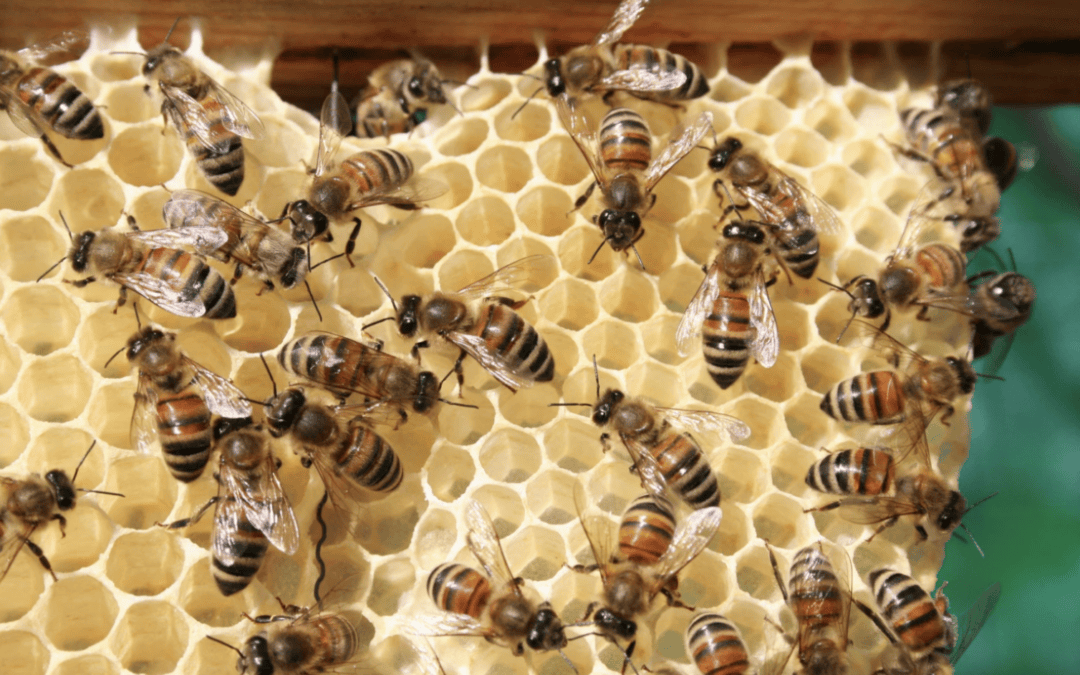
If you’ve found a hive on your property and you’re searching for Africanized bee removal San Diego homeowners can trust, there’s one thing to know before anything else: you can’t tell a defensive colony apart from a docile one just by looking at it. Africanized honey bees look nearly identical to the common European honey bee, and that similarity is exactly why an unknown hive should always be treated with caution and handled by a professional, not approached or tested.
Key Takeaways
- Africanized honey bees have been established in Southern California for years, alongside the more familiar European honey bee.
- The two types are visually almost indistinguishable — behavior, not appearance, is the real warning sign.
- Africanized colonies defend their hive more readily, in larger numbers, and at smaller provocations.
- A honey bee colony functions as a single, coordinated unit, which is part of why disturbing even a small section of it can trigger a much larger response.
- Professional identification and removal protects both people and the colony, since Africanized bees are still honey bees and can often be relocated rather than exterminated.
What Africanized Bees Actually Are
Africanized honey bees are a hybrid strain descended from bees brought to Brazil decades ago that later spread north through the Americas, eventually reaching the southern United States. According to reporting from ABC News, entomologist Dr. Justin Schmidt notes that if you live in Southern California, Arizona, New Mexico, Texas, or Florida, you can reasonably assume Africanized colonies exist somewhere nearby. They’re often called “killer bees” in casual conversation, but the name overstates the danger from an individual sting — the real risk comes from how a colony responds when it feels threatened.
Why “Africanized” Doesn’t Mean “Different Looking”
This is the detail that matters most for homeowners: Africanized and European honey bees look close enough that telling them apart on sight isn’t realistic, even for experienced observers. Schmidt compared it to spotting a mugger versus a saint on the street — you often can’t tell the difference until it’s too late to matter. That’s why AA Beekeeper treats every unidentified hive as a potential Africanized colony until a professional inspection says otherwise, rather than relying on a quick visual guess.
Why Africanized Colonies Are More Defensive
A honey bee colony operates as a single coordinated unit rather than a collection of independent insects. As described by the Mid-Atlantic Apiculture Research and Extension Consortium (MAAREC), a colony’s workers rely on chemical communication — including alarm pheromones — to organize collective behaviors like defense. Africanized colonies simply respond to that same communication system more aggressively: they mobilize more bees, respond to smaller disturbances like nearby vibration or noise, and stay agitated longer than a typical European colony. That combination is what makes Africanized bee removal in San Diego a job for professionals rather than a homeowner with a can of spray.
Signs You May Be Dealing With an Africanized Colony
While a certain identification requires a professional, a few patterns tend to show up more often with Africanized colonies:
- A defensive response triggered by minor disturbances — lawn equipment, foot traffic, or even loud noise nearby.
- A larger number of bees responding at once, rather than a few guard bees.
- Bees that continue pursuing a person or pet over a longer distance than expected.
- A colony that’s re-established quickly after a previous removal attempt that didn’t fully clear the nest.
If any of these sound familiar, the safest move is to stay away from the area entirely and call a professional rather than attempting to confirm the behavior yourself.
Why DIY Removal Is a Bad Idea With Any Unknown Hive
Spraying, sealing, or otherwise disturbing a hive without knowing what you’re dealing with is risky even with a docile colony — and considerably more so with an Africanized one. A failed DIY attempt often agitates the colony without actually removing it, leaving a homeowner with a more defensive hive and no clearer path to a solution. AA Beekeeper’s bee removal services start with proper identification and a full inspection precisely because guessing wrong with an Africanized colony can mean a serious, fast-moving safety risk.
How Professionals Handle Africanized Bee Removal San Diego Homeowners Can Rely On
Our licensed, bonded, and certified team approaches every unidentified hive the same cautious way: assess first, then act. That means identifying the colony’s location and behavior, using appropriate protective equipment for a potentially defensive colony, and, whenever it’s safe to do so, relocating the bees alive rather than exterminating them — because Africanized bees are still honey bees, and still valuable pollinators. Our San Diego bee removal team has handled this exact situation across the county for nearly 30 years, and same-day or next-day response is available for situations that can’t wait.
Frequently Asked Questions
Are Africanized bees actually more venomous than regular honey bees? No — sting for sting, the venom is essentially the same. The added danger comes from how many bees respond and how quickly, not from the potency of an individual sting.
Can I tell if a hive is Africanized just by looking at it? Not reliably. The two types are visually very similar. Behavior under provocation is the clearer signal, but by the time that’s obvious, it can already be dangerous to be close by.
Is it true Africanized bees are common in San Diego? Yes. Southern California is one of the regions where Africanized colonies have been established for years alongside European honey bees.
Will a professional kill an Africanized colony instead of relocating it? Not automatically. AA Beekeeper prioritizes live relocation whenever it’s safe to do so, since Africanized bees are still an important pollinator species — the approach depends on the specific colony and site conditions.
Let Professionals Identify and Handle the Hive
If you’ve spotted a hive anywhere on your property and you’re not sure what you’re dealing with, don’t try to find out yourself. Start with a free phone consultation — tell us what you’re seeing and where you’re located, and our team will help you understand the risk level. From there, we can schedule an in-person inspection, often available same-day or next-day, and provide a transparent estimate for safe, professional removal.